1001 W Indiantown Rd, Ste 106, Jupiter, FL 33458

Can You Get Dental Implants After Missing Teeth for 10+ Years?

The short answer is yes, but there’s more to the story than a simple yes or no. Long-term tooth loss poses challenges that don’t disqualify you for implants but do shape the path to getting them. Understanding what’s changed in your jaw over the years is the most honest place to start.
Millions of people are living with tooth loss that goes back years, sometimes decades. According to the American College of Prosthodontists, about 178 million Americans are missing at least one tooth, and more than 35 million are missing all teeth in one or both arches. A large portion of those people have been living with the gap for a long time — not because they chose to, but because treatment felt out of reach, or life just kept moving.
If that sounds familiar, here’s what you need to know.
What Happens to Your Jaw When a Tooth Has Been Missing for Years
The Bone Loss Problem And Why It Matters
Your jawbone needs stimulation to maintain its density. That stimulation comes from the roots of your teeth, which transmit bite forces into the bone every time you chew. When a tooth is lost, that stimulation stops. The bone in that area begins to resorb — it gradually shrinks in both height and width.
This process starts within the first year of tooth loss and continues slowly over time. Research published in the Journal of Dental Research has found that the greatest rate of bone resorption occurs in the first 12 months after extraction, but the loss doesn’t stop there. After a decade without a tooth, the bone volume in that area can be substantially reduced compared to where it started.
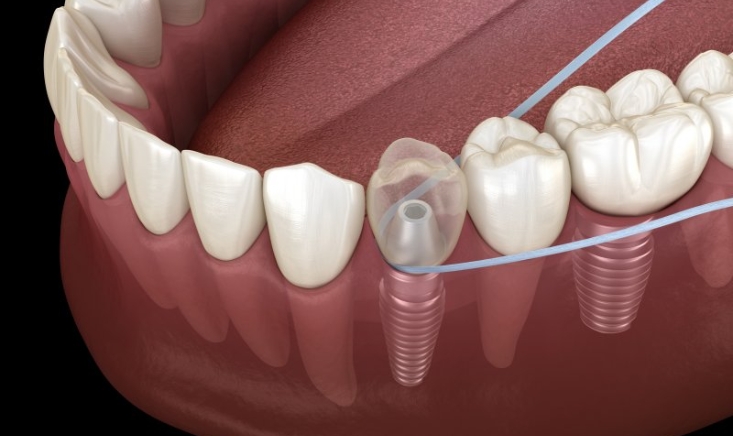
For patients exploring dental implants in Jupiter, this is one of the first things a thorough clinical evaluation will address. The implant post is placed directly into the jawbone, so bone volume and density are critical. If there isn’t enough bone to securely hold the implant, placing one without additional treatment would compromise the result.
Does This Mean Implants Aren’t Possible?
Not at all. Bone loss changes the timeline and may add a step, but it doesn’t eliminate implants as an option for most patients.
Bone Grafting: The Step That Changes Everything
Bone grafting is a well-established procedure that rebuilds the bone where it’s been lost. Grafting material, which can come from the patient’s own body, a donor source, or a synthetic substitute, is placed in the deficient area. Over several months, the patient’s bone grows around it, restoring the volume and density needed to support an implant.
The healing period after a bone graft typically runs three to six months, sometimes longer, depending on how much rebuilding is required. It adds time to the overall treatment plan, but for patients who’ve already waited years, a few more months is rarely a dealbreaker. What this means is that the implant, once placed, has a solid foundation, making the long-term outcome predictable.
Sinus lifts are another procedure used specifically in the upper back jaw, where the maxillary sinuses can encroach on the available bone space. If you’re missing upper molars that have been gone for years, a sinus lift may be part of your treatment plan before implant placement.
What a Long-Term Patient Evaluation Looks Like
When you present with long-standing tooth loss, your dentist’s evaluation goes deeper than a standard implant consultation. Here’s what that typically involves:
- 3D cone beam CT imaging to assess current bone volume, density, and the position of anatomical structures like nerves and sinuses
- Periodontal assessment to check the health of the surrounding teeth and gum tissue
- Medical history review covering conditions like diabetes, osteoporosis, or a history of bisphosphonate use — all of which affect bone metabolism and healing
- Occlusal analysis to evaluate how your remaining teeth have shifted over time and how implant placement would restore proper bite alignment
Jupiter, FL, has a substantial population of retirees and long-term residents who’ve been managing dental issues for years. Many have delayed treatment due to cost concerns or general uncertainty about whether it’s too late. The honest answer from a clinical standpoint is that age alone isn’t a disqualifying factor. What matters is systemic health, bone condition, and overall oral health — not how many years have passed.
Health Conditions That May Complicate But Not Necessarily Prevent Treatment
A few medical factors require honest discussion before moving forward.
Uncontrolled diabetes significantly impairs healing and increases infection risk. Well-controlled diabetes, however, is generally compatible with implant treatment when managed carefully. Your A1C levels will be part of the conversation.
Osteoporosis and the medications used to treat it, like alendronate, can affect bone healing around implants. This requires thorough evaluation, but doesn’t automatically disqualify you.
Smoking reduces blood flow to the gums and bone, which compromises healing after both grafting and implant placement. Studies consistently show higher implant failure rates in smokers. If you smoke, your dentist will discuss what that means for your specific treatment plan.
None of these factors are automatic disqualifier. They’re variables that require a personalized approach — which is exactly what a proper implant evaluation provides.
You’ve Already Waited Long Enough
If you’re living with missing teeth for years, the question isn’t really whether it’s too late — it’s whether you’re ready to find out what’s possible for your situation. A proper evaluation gives you a clear, honest picture of where you stand and what your options look like.
Call Modern Dentistry of Jupiter today to schedule your implant consultation. We’ll take the imaging, review your history, and walk you through a treatment plan tailored to your dental health.
People Also Ask
1. How long does the full implant process take when bone grafting is required?
The timeline varies depending on how much bone needs to be rebuilt, but most patients who require bone grafting complete the process, from graft placement to final crown, within 12 to 18 months. Some cases move faster; others take longer based on the healing response.
2. Will my remaining teeth shift if I’ve had missing teeth for years?
Yes. Teeth adjacent to and opposing a gap tend to drift and tilt over time. This can affect your bite and may require orthodontic or restorative work before or alongside implant placement to restore proper alignment.
3. Can implants replace multiple missing teeth, not just one?
Yes, they can. Implant-supported bridges can replace several consecutive missing teeth using just two implants as anchors. For patients missing all or most of their teeth, implant-supported full arch solutions (sometimes called All-on-4 or similar) can restore an entire arch with a fixed prosthetic.
4. How do I know if I’m a candidate without coming in for an evaluation?
You can’t and no one else can, without imaging and examination. Online self-assessments aren’t reliable for implant candidacy. An in-person consultation with 3D imaging is the only way to accurately evaluate your bone volume, anatomy, and health.
5. Is there an age limit for dental implants?
There’s no upper age limit. Implants can be placed in healthy adults at any age, provided the jawbone has finished developing (which rules out placement in younger adolescents). Systemic health and bone condition matter far more than age.